What Is Somatic Healing for Trauma and Why Are Sydney People Seeking It?
Somatic healing for trauma is a body-based approach to recovery that works directly with the nervous system rather than relying solely on verbal processing. Catherine at Intimacy Divine has guided hundreds of people across Sydney through this work over 15 years, and the question she hears most often is simple: why do I still feel this way even after years of talking about it? That question deserves a real answer.
Talk therapy is genuinely valuable. But it primarily engages the thinking mind, and trauma doesn’t live there. Trauma lives in the body — in the held breath, the braced shoulders, the gut that clenches before you even know why. Somatic approaches work with those physical patterns directly, which is why so many people find relief here that they couldn’t access anywhere else.
Sydney carries its own particular weight right now. Many people in the Inner West, the Northern Beaches, and Wollongong are still processing compounding stressors: the isolation years, bushfire seasons, and the quiet accumulation of grief that never got named. This article is for you if you’ve done the work and still feel stuck.
Why Does Trauma Stay in the Body and Why Does That Matter in Sydney Right Now?
Trauma isn’t a memory stored neatly in the mind. It’s a physiological event that gets frozen into the body when the nervous system couldn’t complete its natural response. Think of an animal after a threat passes — it shakes, trembles, discharges the energy, and returns to calm. Humans often can’t do that, particularly when the trauma is prolonged or relational. The energy stays locked in.
For people across Sydney who’ve experienced childhood trauma, difficult births, sexual violence, accidents, or years of emotional shutdown, this can show up as chronic tension, dissociation, anxiety that medication dulls but doesn’t resolve, or a persistent sense of being numb. These aren’t character flaws. They’re nervous system adaptations that served a purpose and now need updating.
The Australian Institute of Health and Welfare has documented consistently high rates of trauma exposure in the Australian population, with compounding effects when trauma goes unaddressed. That context matters because it means many Sydney practitioners are working with complex, layered presentations — not simple single-event trauma.
Why Doesn’t Talking About It Fix It?
The brain regions most activated during trauma, particularly the amygdala and the brainstem, largely bypass the prefrontal cortex, where language and reasoning live. So when you retell a traumatic experience, your body often re-enters the fear state without your thinking brain being able to intervene. This is sometimes called re-traumatisation. Somatic work interrupts that loop by building body-based resources before revisiting difficult material.
If you’ve been trying to think your way out of something that lives below thought, you’re not failing. You’re just using the wrong tool. Catherine has worked with many clients in exactly this position, and booking a free 20-minute conversation with Intimacy Divine is often the first step toward finding the right one.
Common Situations This Article Addresses
- “I’ve had years of therapy but still feel numb, anxious, or disconnected from my body.”
- “Something happened to me that I’ve never been able to talk about, and I’m not sure I want to.”
- “My body holds tension and pain that no physical treatment seems to resolve.”
- “I want to feel more alive and present in my relationships, but something keeps blocking that.”
What Is Somatic Healing and How Does Somatic Therapy Actually Work?
What is somatic healing, at its most practical? It’s the deliberate use of body-based awareness, movement, breath, touch, and sensation to help the nervous system complete interrupted threat responses and build new patterns of safety. The word somatic comes from the Greek soma, meaning body. The practice itself draws from several established frameworks, including Somatic Experiencing, Sensorimotor Psychotherapy, and Sexological Bodywork.
How does somatic therapy work session to session? Broadly, a practitioner will help you track sensations in your body without immediately interpreting them. You might notice a tightness in your chest, a warmth in your hands, an impulse to move that you’ve habitually suppressed. Instead of analysing what that means, you stay with it. You resource it. Gradually, the nervous system learns that sensation is survivable, and the frozen patterns begin to thaw.
Practical Body-Based Exercises You Can Start at Home
Most clinical writing on this topic stops short of giving you something you can actually use today. Here are four exercises that trauma survivors in Sydney and Wollongong can try independently between sessions.
Orientation practice. Slowly look around the room you’re in. Let your gaze land softly on objects without urgency. Notice what feels neutral or even pleasant. This simple act tells your nervous system that the present environment is safe, which is often the first step out of a stress response.
Grounding through the feet. Press both feet flat against the floor. Notice the contact, the pressure, the temperature. Take three slow breaths while keeping that contact. This practice activates the ventral vagal system, which governs calm, social engagement.
Pendulation. Find one small area of your body that feels comfortable or neutral right now. Then gently notice one area of tension. Move your attention back to the comfortable area. Repeat slowly. This builds tolerance for difficult sensations without overwhelm.
Shaking practice. Stand with feet hip-width apart, soften the knees slightly, and allow a natural trembling to emerge. Don’t force it. If it comes, let it continue for 30 to 60 seconds. This mimics the animal discharge response that trauma interrupts.
These aren’t replacements for skilled support, but they build the body literacy that makes professional sessions more effective.
How Does Nervous System Regulation for Trauma Healing Actually Work in Practice?
Nervous system regulation for trauma healing is the central mechanism behind all somatic approaches. The autonomic nervous system, specifically the polyvagal system as described by Dr Stephen Porges, operates in three primary states: ventral vagal (safe and social), sympathetic (fight or flight), and dorsal vagal (shutdown). Trauma survivors often get stuck cycling between the latter two.
Somatic work builds capacity in the ventral vagal state. That means developing the body’s ability to feel safe, to connect, and to return to regulation after activation. It’s not about eliminating stress responses — those are essential for survival. It’s about expanding the window of tolerance so that more of life can be felt and engaged with.
And crucially, this isn’t achieved through willpower or insight. It’s achieved through repeated, titrated somatic experience — small, manageable doses of activation followed by return to safety. Each time the body activates slightly and then settles, the nervous system updates its map of what’s possible. Over time, that window widens substantially.
What Does This Look Like in a Session in Sydney?
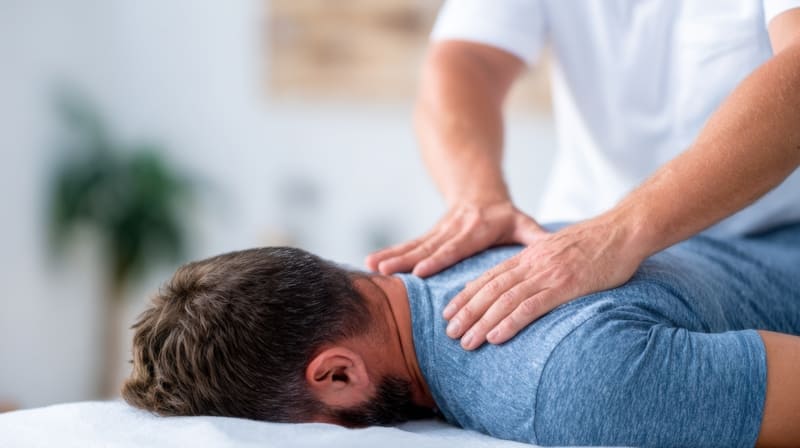
A session with Catherine at Intimacy Divine in Sydney might begin with simple body-awareness tracking. You sit, you breathe, you notice. If touch is included and consented to, it’s used as a vehicle for sensation awareness, not as a performance of connection. Sessions move at your pace. There’s no protocol that overrides your actual experience on the day.
For clients coming from Wollongong and the Sydney CBD, Catherine offers both in-person and distance sessions. The online format works well for the regulation-building and awareness stages, though some body-based work is best supported in person. Working out what’s right for your situation is part of what an initial conversation will clarify.
People working with complex trauma, including religious trauma, birth trauma, and developmental trauma from childhood, often find that the somatic frame is the first place they’ve felt genuinely met. That’s not accidental. The Australian Psychological Society recognises somatic approaches as evidence-supported frameworks for trauma treatment.
For people who are ready to explore nervous system regulation in a structured, safe environment, Catherine’s services at Intimacy Divine offer a carefully held starting point.
What Are the Symptoms of Trauma Stored in the Body and How Do You Know You Need This Work?
Trauma stored in the body symptoms are often misdiagnosed or dismissed because they don’t look like what most people expect trauma to look like. They don’t always involve flashbacks or nightmares. Instead, they might show up as chronic pelvic tension, jaw clenching, difficulty breathing fully, sexual numbness, persistent fatigue that sleep doesn’t fix, hypersensitivity to sound or touch, or a sense of being vaguely not here.
These are somatic trauma signals. They’re the body’s way of continuing to brace against something that may have happened decades ago. The nervous system doesn’t know that the threat has passed. It’s still doing its job, loyally, exhaustingly, long after the danger is gone.
How Do You Find a Trustworthy Somatic Practitioner in Sydney?
This is where the lack of regulation in some complementary therapy spaces requires real care. In Australia, the term somatic therapist isn’t legally protected the way a psychologist is. That means anyone can use the label. So credentials and professional membership matter significantly.
Catherine holds certification as a Sexological Bodyworker through the Association of Certified Sexological Bodyworkers, one of the few internationally recognised credentialling bodies in this field. She’s also an Approved Training Provider with the International Institute for Complementary Therapists (IICT), which requires ongoing professional standards and peer accountability. The IICT maintains a public practitioner directory that lets you verify a practitioner’s standing before you book.
Beyond credentials, look for a practitioner who makes explicit what the work will and won’t involve, who uses clear consent processes at every stage, and who doesn’t rush you toward catharsis or intensity. Genuine somatic work is slow, careful, and led by your system’s actual readiness — not a practitioner’s agenda.
What Does Catherine’s Own Journey Tell You About This Work?
Catherine’s path to becoming a somatic practitioner wasn’t academic. It was forged through loss. The traumatic birth of her son broke something open in her that talk therapy, despite being genuinely supportive, couldn’t fully reach. What helped her find her way back was the body: somatic therapy, tantra, and sacred body-based practice that met her where words ran out.
That experience shaped everything about how she works now. My clients in Sydney’s Inner West, and people making the drive up from Wollongong, often arrive having already done years of good therapeutic work. What they’re looking for is the next layer — the layer that lives below the narrative they’ve already told a hundred times.
What Sets Intimacy Divine Apart in the Sydney Context?
Catherine brings something specific to her Sydney practice that isn’t easy to find: the combination of deep personal experience, rigorous professional training, and a shame-free relational field. She works with people carrying sexual trauma, birth trauma, grief, and years of disconnection. The work isn’t clinical in a cold sense. It’s precise and warm at once.
Intimacy Divine exists, as Catherine puts it, because healing shouldn’t require you to perform wellness before you feel it. That framing matters. It means the work begins exactly where you are, not where you’re supposed to be. For those in Sydney CBD looking for a practitioner who won’t pathologise your experience, that’s a meaningful distinction.
What Do Client Experiences at Intimacy Divine Actually Look Like?
The following examples are illustrative of the kinds of situations Catherine works with. They are not drawn from identified individuals.
Situation: A woman in her early 40s from Glebe arrived having experienced a traumatic birth seven years earlier and describing near-total numbness in her lower body.
What Changed: Through somatic tracking and gentle touch-based work over several months, she began to reconnect with sensation in her pelvis and pelvic floor. Each session built on the last, with no pressure to reach a particular outcome.
Result: She described feeling her body as her own for the first time since the birth, with measurable improvements in her capacity for physical intimacy and her relationship with her own reflection.
Second Example
Situation: A man in his late 30s from the Sydney CBD sought support after years of emotional shutdown following childhood emotional neglect.
What Changed: Somatic work focused on building ventral vagal capacity through orientation, grounding, and titrated activation. Insights from sessions helped him recognise how shutdown had been a protection, not a deficiency.
Result: Over six months, his reported capacity for emotional connection with his partner shifted from minimal to consistently present, and his anxiety significantly reduced.
What Are the Best Ways to Begin Somatic Healing for Trauma in Sydney?
Start with a body inventory before your first session. Spend five minutes each morning noticing where you hold tension, where you feel numb, and where you feel neutral. This simple practice builds body literacy and makes your first professional session more productive.
Choose a practitioner whose credentials are verifiable. In Sydney and Wollongong, the complementary therapy space is broad and uneven. Use the IICT practitioner directory or the ACSB register to check that the person you’re working with meets a recognised professional standard. Don’t assume a warm website equals professional accountability.
Plan for a slow process. Somatic healing for trauma isn’t crisis counselling. Most people work with a somatic practitioner for months, not weeks. Budget for a minimum of six sessions before expecting to evaluate outcomes. This is especially true for complex, developmental, or sexual trauma.
Use the free exercises in this article between sessions. The orientation practice, grounding through the feet, pendulation, and shaking practice described earlier are all low-risk starting points. Introduce them gradually and stop if any exercise produces a strong stress response rather than settling.
Consider the context of your trauma when choosing your approach. People processing bushfire trauma, grief, sexual trauma, or cultural and intergenerational trauma each need slightly different emphases within the somatic frame. Ask a potential practitioner specifically how they work with your particular history before committing.
Further Reading and Helpful Resources
- About Catherine and Intimacy Divine
- Intimacy Divine services overview
- Contact Intimacy Divine to ask a question
What Is Coming for Somatic Healing Practice in Australia Through 2025 and 2026?
Somatic approaches to trauma are gaining formal recognition in Australia at an accelerating rate. The Australian Psychological Society’s inclusion of body-based frameworks in clinical guidelines over the past two years marks a meaningful shift. Additionally, as of 2025, several NSW-based tertiary institutions are integrating somatic principles into counselling and social work curricula, signalling that this is no longer a fringe conversation.
For practitioners in Sydney and Wollongong, this shift matters practically. Somatic work is increasingly being recognised by mental health care plans and workplace wellbeing programs, though funding pathways remain inconsistent. Clients are advised to check directly with their GP or mental health practitioner about current Medicare and private health options, since policy is actively evolving.
There’s also growing recognition of the need for trauma-informed somatic frameworks that account for culturally specific experiences. This includes First Nations healing practices that have long understood the connection between body, land, and wellbeing — an understanding that Western somatic frameworks are only beginning to catch up with.
It also includes the somatic aftereffects of natural disasters such as the Black Summer bushfires and subsequent flooding events in the Illawarra region near Wollongong. Bodies in those communities absorbed experiences that no amount of cognitive reframing can fully address. As the field matures in Australia, these culturally grounded frameworks deserve proper integration, not tokenistic mention.
Beyond clinical recognition, demand for somatic healing in Sydney is growing among people who’ve never accessed any form of mental health support before. That represents a genuine opportunity for community wellbeing, provided that the practitioners meeting this demand hold appropriate credentials and consent-based frameworks.
Frequently Asked Questions
Common Questions
How is somatic healing for trauma different from talk therapy?
Somatic healing for trauma works directly with the nervous system through body-based awareness, movement, breath, and sometimes touch. Trauma is stored physiologically rather than purely as memory, so this approach reaches patterns that verbal processing often can’t access. Talk therapy and somatic work are genuinely complementary, and many people benefit from both running in parallel. For those who feel stuck despite years of good verbal therapy, the body-based frame frequently opens new ground.
How do I know if my trauma symptoms are being held in my body rather than just in my thoughts?
Physical signals are often the clearest indicator. Chronic tension in the jaw, neck, pelvis, or chest, difficulty breathing fully, sexual numbness, persistent fatigue, or a sense of not quite inhabiting your body are all common somatic trauma signals. These symptoms frequently persist even when someone has good cognitive insight into their trauma history. If your body consistently braces, shuts down, or dysregulates without an obvious present-day cause, somatic work is likely worth exploring.
Can you share evidence that somatic healing actually works for trauma?
Research support for somatic approaches has grown considerably over the past decade. Somatic Experiencing, developed by Peter Levine, has been studied in populations ranging from veterans to accident survivors, with consistent findings around reduced PTSD symptom severity and improved nervous system regulation. Sensorimotor Psychotherapy similarly has a growing evidence base. Catherine’s practice at Intimacy Divine draws on these frameworks alongside 15 years of direct clinical experience with complex trauma presentations.
Does somatic healing for trauma involve physical touch?
Somatic healing for trauma doesn’t require touch. Many effective somatic sessions are entirely verbal and awareness-based. When touch is used, it’s always explicitly negotiated, consented to, and can be declined or modified at any point. Catherine works within a rigorous consent framework consistent with her ACSB certification. For many clients, particularly those with touch-related trauma, a non-touch somatic approach is the most appropriate starting point and may remain the primary modality throughout.
What is nervous system regulation and why does it matter for trauma recovery?
Nervous system regulation refers to the body’s ability to return to a calm, connected state after activation. In trauma survivors, this capacity is often reduced, meaning the nervous system stays stuck in fight, flight, or shutdown. Building regulation is the foundation of somatic trauma healing. Without it, deeper trauma processing is likely to overwhelm rather than heal. Regulation is built gradually through repeated, titrated somatic experiences that expand the window of tolerance over time.
Still Have Questions?
How long does somatic trauma healing typically take and what does it cost in Sydney?
Timelines vary considerably depending on the complexity and duration of the trauma. Simple single-event trauma may shift meaningfully within 8 to 12 sessions. Complex, developmental, or repeated trauma often requires 6 to 12 months of regular work. Session fees for qualified somatic practitioners in Sydney typically range from $150 to $300 per session, depending on credentials and session length. Some workplace wellbeing programs and certain private health policies now include somatic therapies, so it’s worth checking your specific cover.
I’m based in Wollongong. Can I access somatic healing without travelling to Sydney?
Yes, and this is increasingly practical. Catherine at Intimacy Divine offers both in-person sessions in Sydney and distance sessions that work well for the regulation-building and body-awareness stages of somatic work. Many clients from the Illawarra region and Wollongong begin online and transition to in-person for specific stages of the work. The hybrid approach is effective and reduces the barrier for people who can’t easily make the trip to Sydney CBD regularly.
Are there any regulations or standards that govern somatic therapy practitioners in Australia?
The term somatic therapist isn’t yet legally protected in Australia, unlike psychologist, which is regulated by the Psychology Board of Australia. Credentialing bodies such as the ACSB and the IICT do provide meaningful professional standards, including ethical codes, supervision requirements, and continuing education obligations. When choosing a practitioner in Sydney or Wollongong, always ask for their specific credentials, which professional body they’re accountable to, and how complaints are handled. Don’t work with a practitioner who is evasive about these questions.
Getting Started and Why Trust Us
How do I get started with somatic healing at Intimacy Divine?
The simplest starting point is a free 20-minute conversation with Catherine. This isn’t a sales call. It’s a genuine opportunity for both of you to assess whether the work and the relationship feel right. You can reach Catherine through the Intimacy Divine contact page and expect a personal, unhurried response. There’s no obligation to proceed, and many people find that the conversation itself provides useful clarity about what kind of support they’re actually looking for.
What credentials and experience does Catherine bring to somatic trauma work?
Catherine holds certification as a Sexological Bodyworker through the Association of Certified Sexological Bodyworkers (ACSB), and the IICT recognises her as an Approved Training Provider. She brings 15 years of direct clinical experience with complex trauma, sexual trauma, grief, and developmental trauma across Sydney and beyond. Beyond her formal credentials, Catherine navigated her own somatic healing journey through profound personal loss, which gives her a quality of presence and understanding that professional training alone can’t produce.
Final Thoughts
Somatic healing for trauma isn’t a niche or alternative add-on to real therapy. For many people, it’s the most direct route available to genuine, lasting change. The body holds what the mind has been unable to process, and working with that directly, carefully, and with a skilled practitioner changes things in ways that talking often can’t.
If you’ve been carrying the weight of something that talking about hasn’t resolved, that’s not a sign that healing isn’t possible. It may simply mean you haven’t yet found the right door. Body-based approaches to trauma have helped many people across Sydney, the Inner West, the Northern Beaches, and Wollongong reconnect with their capacity for feeling, connection, and aliveness.
Catherine at Intimacy Divine brings 15 years of direct experience, rigorous credentials, and a deeply human quality of presence to this work. It’s precise. It’s gentle where it needs to be, and honest where that’s what’s required. And it begins from where you are, not where you think you should be.
If you’re ready to take a first step, book a free 20-minute conversation with Catherine at Intimacy Divine and begin from exactly where you are.